

KnifeLegends Features Custom Knife Work of Michael Walker and Antonio Fogarizzu
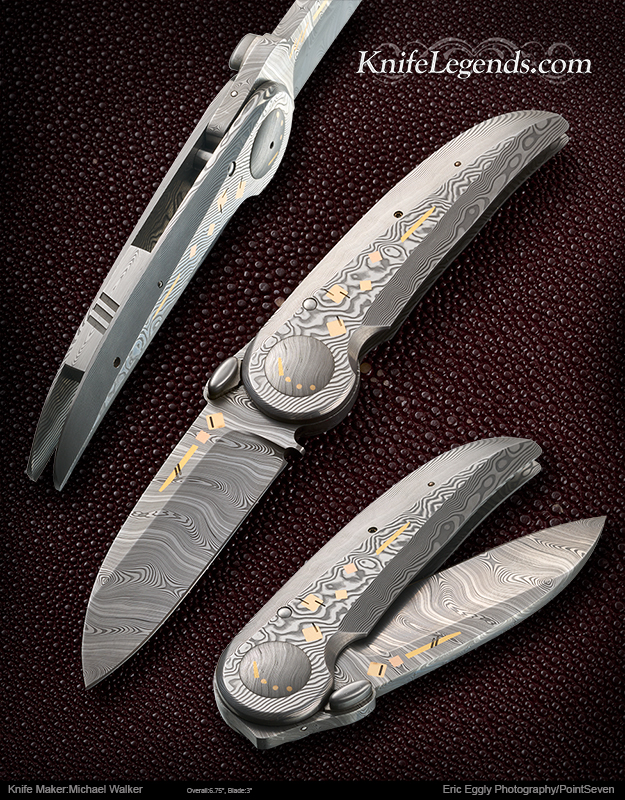
Michael Walker custom knife
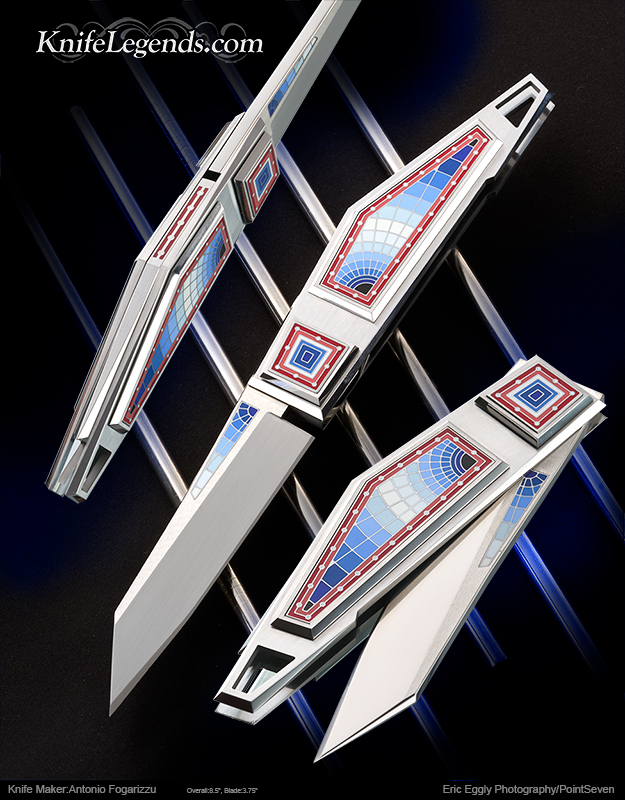
Antonio Fogarizzu custom knife
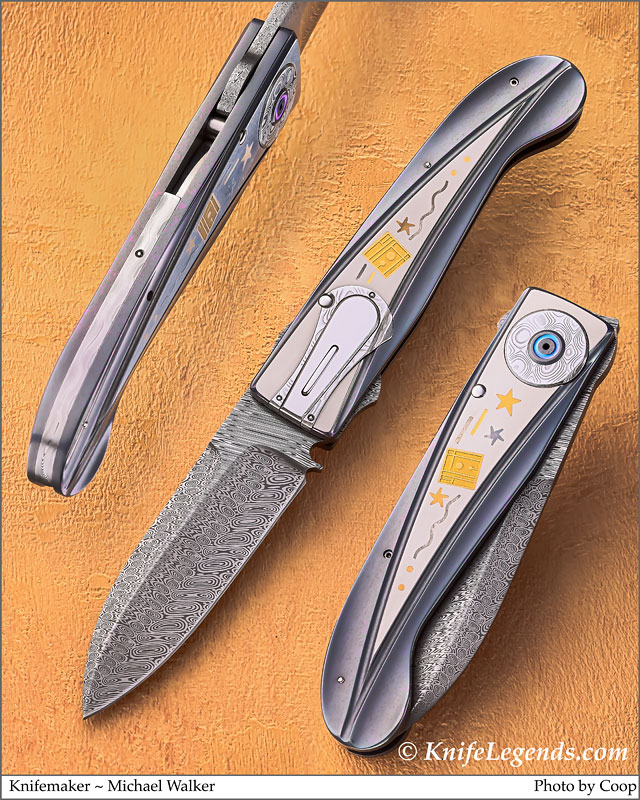
folding knife,

knife legends,
KnifeLegends is featuring the custom knife work of Michael Leon Walker of Taos, New Mexico, and Antonio Fogarizzu of Pattada, Sardinia, Italy.
BROOKLINE, MA, UNITED STATES, September 23, 2026 /EINPresswire.com/ -- KnifeLegends is featuring the custom knife work of Michael Leon Walker of Taos, New Mexico, and Antonio Fogarizzu of Pattada, Sardinia, Italy. The two makers come from different craft traditions and developed distinct approaches to knife design. Walker became known for his work on folding knife mechanisms, including improvements that made the Linerlock smoother and safer to operate, while Fogarizzu carries a Sardinian family tradition into contemporary custom knife making. Their careers offer two useful views of how personal experience, local craft, and technical ideas can shape handmade knives.Two Makers With Different Craft Foundations
The history of custom knife making includes makers who entered the field through many different trades. Walker came from a jewelry background and later applied that experience to art knife construction. Fogarizzu grew up around his father's workshop in Sardinia, where several generations of his family had worked with iron and knives.
Those early settings had a clear effect on their work. Walker became closely associated with folding knives and improvements to locking mechanisms. Fogarizzu developed work that connects traditional Sardinian knife forms with newer methods and materials. Looking at both makers side by side shows how custom knife design can grow from both family craft and individual experimentation.
Michael Walker’s Move From Jewelry to Knifemaking
Michael Leon Walker was born in 1949 and is based in Taos, New Mexico. His first professional background was in jewelry. That experience later became useful as he began working with custom art knives and small metal components.
A turning point came in 1975. Walker received a Gerber knife and a copy of American Blade magazine from his wife, Patricia Walker. He noticed similarities between jewelry work and the construction of custom art knives. That connection led him to experiment with knife making.
By 1980, Walker was making knives full time. His early work included fixed blades made as art knives. Over time, his attention moved toward folding knives. He found sheath making less appealing, and this change in direction led him deeper into folding knife construction and locking mechanisms.
Michael Walker Improved the Linerlock With a Ball Détente
The Michael Walker custom knife reflects his work in refining folding knife mechanisms. Michael Walker did not invent the Linerlock. His contribution was to improve the mechanism and its operation. One of the key additions associated with his work was the Ball Détente, which helped make the Linerlock smoother and safer to operate.
The Linerlock uses a section of the knife liner as a spring. When the blade opens, the liner moves behind the blade and helps hold it in position. Walker's work helped refine how this type of locking system operated in a folding knife.
Walker also worked with Ron Lake in a limited partnership that began in 1981. Their work included the LAWKS, or Lake and Walker Safety System. Walker was also associated with several patents covering knife locking mechanisms during his career.
These developments are significant in the study of modern folding knives because they show how a maker can influence knife construction beyond individual handmade pieces. Walker's work combined artistic knife making with mechanical design, giving his career a place in both areas of custom knife history.
A Maker Whose Influence Reached Other Knifemakers
Walker’s influence extended beyond his own knives. Bob Terzuola has credited Walker with teaching him aspects of linerlock folder construction. Ernest Emerson has also described seeing one of Walker's knives as an influence on his decision to pursue custom knifemaking.
Such accounts help place Walker's work within the wider development of American custom knives. A technical idea can spread through direct contact between makers, demonstrations, conversations, and shared work at knife shows or within maker groups.
Walker became a voting member of the Knifemakers' Guild in 1985. In 2004, he was inducted into the Blade magazine Cutlery Hall of Fame. These milestones form part of the documented history of his career and his role in the custom knife field.
Antonio Fogarizzu Carries a Sardinian Craft Tradition
Antonio Fogarizzu comes from Pattada, Sardinia, an area known for a long knife-making tradition. His family has practiced artisan ironworking and knife-making across several generations.
Fogarizzu spent much of his childhood in his father's workshop. That setting introduced him to metalworking and knife construction at an early age. He made and sold his first knife at the age of 14.
His path later took him to England after high school. The experience gave him an opportunity to live outside Sardinia and encounter different ideas and surroundings. He eventually returned to Pattada, where he continued developing his knife-making skills.
His professional career began in 1992. By 2015, he had also begun teaching apprentices, extending the family craft tradition through direct instruction.
Traditional Sardinian Forms Meet Modern Methods
The Antonio Fogarizzu custom knife reflects both his Sardinian background and the techniques he developed through years of work. His designs can combine traditional knife forms with materials such as gold, black pearl, carbon fiber, and Mosaic Damascus steel.
Fogarizzu's work also involves different approaches to design and construction. His methods include forging Mosaic Damascus steel, drawing designs by hand, developing patterns with CAD, and using detailed engraving techniques.
The combination of old and new methods is part of what makes his work useful to study. Traditional knife forms provide a link to local history, while modern design tools can help a maker test shapes, proportions, and construction ideas before a knife reaches the workshop stage.
A Different Approach to Folding Knife Mechanics
Fogarizzu's work is not limited to traditional forms. He has also developed his own locking mechanisms. The Slide Lock is one example. It uses a sliding button placed within the handle to operate the locking system.
Locking systems are a key part of folding knife engineering. The mechanism must control blade movement while fitting into the handle without overwhelming the design. A maker who develops a new lock is therefore working on both the mechanical and visual sides of the knife.
This aspect of Fogarizzu's work provides an interesting point of comparison with Walker. Both makers have contributed to folding knife locking systems, but they did so within different personal and cultural settings. Walker's work included refining the operation of the Linerlock with the Ball Détente, while Fogarizzu developed his own Slide Lock system.
Materials Shape the Character of Handmade Knives
Materials are another clear point of difference between the two makers. Walker's career is strongly associated with mechanical developments in folding knives, while Fogarizzu has worked with a broad range of materials that can affect both structure and appearance.
Fogarizzu's use of carbon fiber, natural decorative materials, gold, and mosaic Damascus shows the range possible in modern custom knife construction. His work can also involve substantial handwork. Individual knives may require weeks or months of effort, and his yearly output has remained relatively small.
That slower production process gives each knife room for detailed design and construction. It also reflects the scale of work found in high-end custom knife making, where a single piece can involve many separate stages.
About KnifeLegends LLC
KnifeLegends LLC is a custom knife company based in Brookline, Massachusetts. The company began in 2004 and focuses on collectible handmade knives by makers from the United States and other countries. Its collection includes folding knives, fixed blades, engraved knives, and other handmade pieces. KnifeLegends also maintains information about individual makers, knife styles, materials, and custom knife history. The company works within the custom knife community and presents knives from makers representing different generations, regions, and design traditions. Its coverage includes both established American makers and international craftsmen whose work reflects local knife-making heritage.
Media Contact:
KnifeLegends
Address: Brookline, MA 02446 USA
Phone: 617-731-3499
Email: pshindler@comcast.net
knife Legends
knife Legends
+1 617-731-3499
pshindler@comcast.net
Visit us on social media:
Instagram
Facebook
X
Legal Disclaimer:
EIN Presswire provides this news content "as is" without warranty of any kind. We do not accept any responsibility or liability for the accuracy, content, images, videos, licenses, completeness, legality, or reliability of the information contained in this article. If you have any complaints or copyright issues related to this article, kindly contact the author above.
